
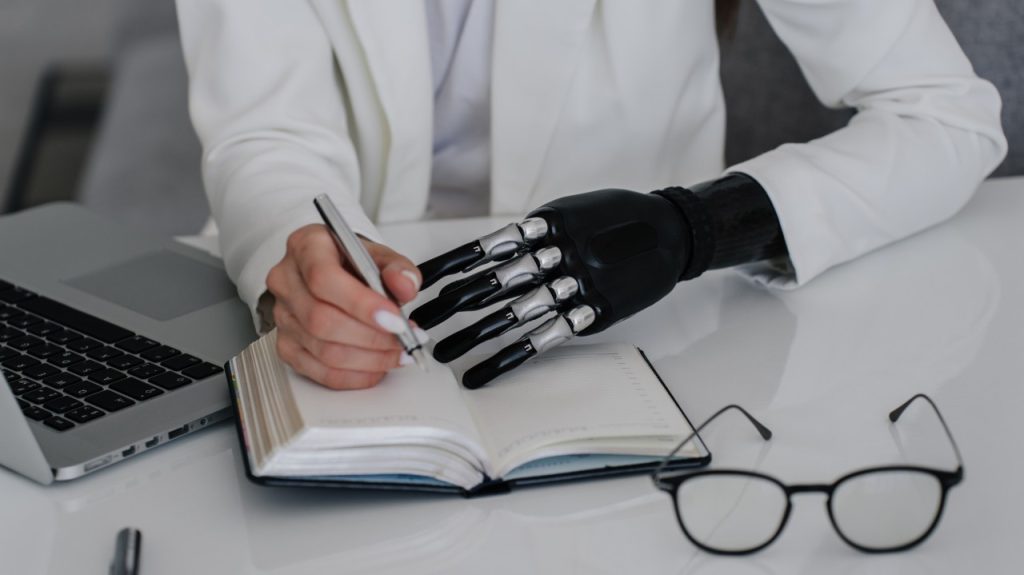
As artificial intelligence (AI) becomes an increasingly integral part of the global insurance ecosystem, a provocative question is surfacing with more frequency—will AI eventually replace human underwriters altogether? In New Zealand’s rapidly digitising insurance sector, where AI adoption in underwriting and claims is already widespread, this question is more than speculative—it touches on the very future of how risk is assessed, priced, and managed.
While some view full automation as an inevitability, others see it as unlikely, pointing to the enduring need for human judgement, ethics, and intuition. The reality likely lies somewhere in between: a future where AI does the heavy lifting and humans handle the nuance. But before exploring what such a hybrid future could look like, it’s worth understanding the foundation being laid today.
Modern underwriting is no longer confined to actuarial tables, static demographics, and hand-filled applications. AI models—particularly those leveraging machine learning—can now evaluate risks dynamically using real-time data, from driving behaviour to biometric inputs.
In New Zealand, insurers are already deploying AI to:
- Analyse customer-provided and third-party data for instant eligibility decisions;
- Evaluate unstructured data like photos, scanned documents, and social signals for risk cues;
- Monitor connected devices (e.g., wearables, telematics, smart homes) for ongoing risk assessments;
- Auto-generate draft policies using generative AI tuned to unique customer risk profiles.
These advances result in reduced processing times, more consistent decisions, and improved accuracy. AI doesn’t get tired, distracted, or biased by personal mood—its decisions are based purely on data, models, and programmed logic.
So, if machines can already do much of what underwriters do—faster and often better—where does that leave the human professional?
From a purely technical standpoint, a future of autonomous insurance—where AI models independently assess, price, and bind policies—is becoming feasible.
- Speed and scale: AI can underwrite thousands of policies per second, something no team of human underwriters could match.
- Consistency: AI ensures uniform application of rules, avoiding the variability introduced by human discretion.
- Cost reduction: Automation significantly lowers administrative costs and improves margins.
- Data depth: AI can consider hundreds of variables simultaneously, integrating structured and unstructured data for better precision.
In this version of the future, human underwriters might be replaced by algorithm developers, model validators, and compliance officers—overseeing the systems rather than doing the assessments.
Despite these advantages, the limits of full automation become evident in complex, ambiguous, or sensitive cases.
AI, however sophisticated, often struggles with nuanced interpretation. Consider a life insurance applicant with a complex medical history that doesn’t align neatly with risk categories. A human underwriter can interpret subtleties, confer with medical professionals, and exercise discretion in edge cases—something AI is still ill-equipped to do reliably.
Underwriting sometimes involves ethically charged decisions—such as determining eligibility after a mental health disclosure or assessing risk in marginalised communities. These are decisions that benefit from human empathy and ethical oversight, not just statistical correlation.
Real-world applications are messy. Information may be incomplete, contradictory, or anecdotal. Human underwriters can follow up, interview applicants, or consult historical precedents. AI requires structured, high-quality data to perform effectively—and its performance can degrade sharply outside those boundaries.
Insurers must comply with growing expectations around fairness, transparency, and explainability. Regulators may require a “human-in-the-loop” model to ensure that automated systems don’t perpetuate bias or result in unfair outcomes. Customers, too, may prefer knowing a real person reviewed their case—especially for high-value or emotionally significant policies.
Rather than a binary choice between AI and human intelligence, the most likely outcome is a hybrid underwriting model—a collaboration between humans and machines that blends the best of both.
As the balance between machine and human shifts, insurers in New Zealand are rethinking their workforce strategies. New roles are emerging: AI trainers, explainability analysts, ethics advisors, and data governance specialists. Simultaneously, traditional underwriting roles are being retooled to include digital skills, data interpretation, and system interaction.
Upskilling and continuous learning will be central to this transition. The underwriter of the future will need to understand how AI systems work, what their limitations are, and how to challenge or override them when necessary.
This shift represents not a reduction in workforce, but a transformation of skills—aligning talent with the future needs of a digitally empowered insurance sector.
Insurance broker and financial advisor Fintrade offers, “The question of whether AI will make, for example, human underwriters redundant reflects a deeper tension: between automation and human insight, efficiency and empathy, prediction and discretion.”
In practice, AI is already redefining the underwriting profession in New Zealand—but not by replacing it. Instead, it is augmenting human capability, streamlining decisions, and shifting underwriters into higher-value roles. The insurers that thrive will be those who embrace this hybrid future—investing in both technology and people.
Rather than fearing obsolescence, underwriters should see AI as an opportunity to become more essential than ever—not just as assessors of risk, but as architects of resilience in a complex and data-rich world.
#AIUnderwriting #InsurTechNZ #FutureOfInsurance #HybridWorkforce #AIInInsurance #DigitalUnderwriting #InsuranceInnovation #MachineLearning #EthicalAI #AIandHumans #InsuranceTransformation #AugmentedIntelligence #HumanInTheLoop #InsuranceCareers #InsurTechTrends #AIInClaims #DataDrivenInsurance #SmartUnderwriting #InsuranceEvolution #AIJobs #DigitalInsurance #TechInInsurance #AICompliance #InsuranceEthics #FintechNZ #AIReshapingRoles #AIandEmpathy #InsuranceAutomation #AIAdoption #AITrust