
The consequences of Donald Trump’s protectionist policies reach far beyond the immediate impact on trade volumes. The instability injected into global markets by unpredictable trade wars and fluctuating tariffs is creating an environment of uncertainty. This, in turn, has a knock-on effect on the global trading system, which was already struggling to regain stability after the economic turmoil caused by the COVID-19 pandemic.
These developments serve as a powerful reminder of how interconnectedness can sometimes lead to turmoil. In the past, the European Union’s (EU) implementation of the Single Market and its monetary unification through the introduction of the Euro sent shockwaves throughout the global economy.
The European Union’s decision to integrate economically and establish a single market for its member states has had profound and far-reaching effects on global trade, investment, and economic governance. Two key developments stand out – the creation of the Single European Market in the early 90s and the subsequent launch of the Euro in 1999 as the single currency for many EU member states. These policy changes dramatically altered the EU’s position in the global economic order, and their ripple effects were felt around the world.
The Single European Market (SEM), established by the Single European Act in 1986 and fully implemented in 1993, aimed to create a unified economic space by removing physical, technical, and fiscal barriers to trade between EU member states. Prior to this, each country had its own set of trade regulations, tariffs, and customs duties, creating inefficiencies and hindering the free flow of goods, services, labor, and capital across borders.
By removing these barriers, the SEM allowed for the creation of an integrated market that could compete more effectively on the global stage. It enhanced the EU’s collective economic power, which became particularly evident as the EU expanded into a bloc of 27 member states with a population of over 500 million people. With fewer restrictions on trade and movement, the EU became one of the largest economies in the world, accounting for nearly a quarter of global GDP by the time of the 2000s.
The EU’s collective bargaining power also made it a powerful actor in international trade negotiations. The EU became a central player in multilateral trade organizations like the World Trade Organization (WTO) and took the lead in negotiating trade agreements with other countries and regions, including the United States, Canada, and emerging markets in Asia and Africa.
For global businesses, the creation of a single market meant easier access to European markets. The common regulatory framework provided certainty and predictability for investors and businesses seeking to expand into Europe. Industries from automotive manufacturing to technology saw expanded opportunities in the EU’s internal market, benefiting from harmonized standards and regulations.
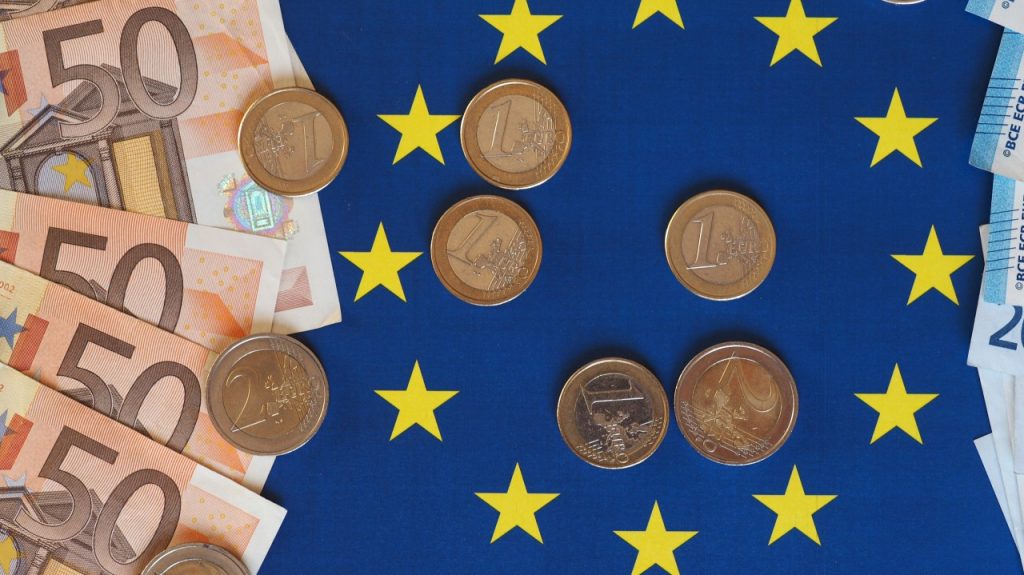
The introduction of the Euro in 1999 as a single currency for 11 EU countries marked a monumental step in economic integration. The aim was to create a more efficient monetary system by eliminating the risks and costs associated with currency exchange between member states. Over the next two decades, the Eurozone expanded, with 19 of the EU’s 27 member states adopting the Euro as their official currency. The Euro’s introduction had immediate and long-term effects on global financial markets and trade. As a currency that is used by a significant portion of the world’s population, the Euro quickly became the second-most traded currency in the world, after the U.S. dollar.
Fintrade Securities observes this shift fundamentally changed global financial markets, as companies and governments across the globe began to use the Euro for trade and investment, particularly in the context of the EU’s economic size and integration. For global markets, the Euro provided an alternative to the U.S. dollar as a reserve currency. This changed the global financial system’s dynamic, giving international businesses and governments the option to diversify their reserves into Euros, reducing their dependence on the dollar.
Moreover, the creation of the Eurozone created a massive, integrated economic block with considerable influence over global markets. By combining multiple national economies into a single currency zone, the EU effectively reduced the currency risks associated with intra-European trade.
However, the Euro also introduced challenges. The financial crisis that began in 2008 exposed the vulnerabilities in the Eurozone’s shared currency, as countries like Greece, Spain, and Italy faced severe economic challenges. The inability of these countries to devalue their currency independently to address national economic issues led to a debt crisis that had ripple effects across the global economy. The European Central Bank (ECB) and the International Monetary Fund (IMF) were forced to intervene to stabilize the region, leading to policy changes that have impacted global financial markets to this day.
#EUEconomy #GlobalTrade #SingleMarket #Eurozone #EconomicIntegration #TradeWars #Protectionism #FinancialMarkets #GlobalImpact #EuropeanUnion #EconomicGrowth #InvestmentOpportunities #MonetaryPolicy #EUExpansion #TradeAgreements #GlobalFinance #CurrencyMarkets #EuroVsDollar #EconomicStability #MarketDynamics #TradeNegotiations #EconomicPolicy #WTO #GlobalBusiness #EUTrade #ForeignInvestment #BrexitImpact #FinancialCrisis #EurozoneCrisis #GlobalReserves #Fintrade